Hidden condition exposed
We lift the covering to inspect felt, battens and the affected roof area.
Correct laps installed
We fit suitable membrane in sequence before reinstating the battens.
Ventilation considered
We account for airflow and moisture within the pitched roof build-up.
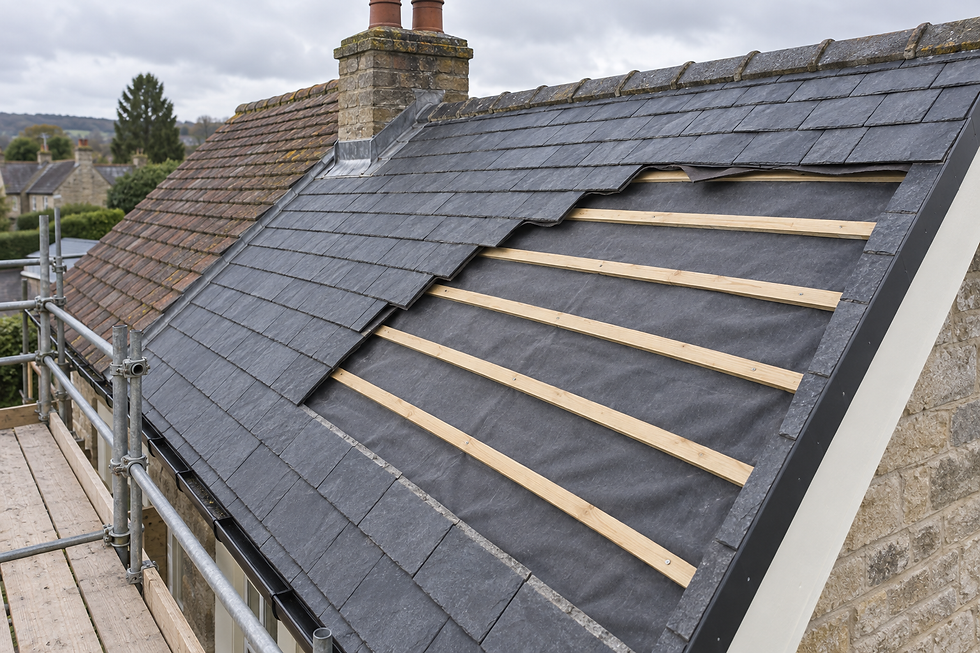
Renew the hidden barrier beneath the covering
Tiles and slates take the first hit from the weather. The underlay beneath them provides a secondary barrier when wind-driven rain or a small covering defect gets through. Tears, sagging and brittle felt can allow water to track into the roof even after visible tiles have been repaired. We undertake roof felt replacement in Cardiff by lifting or stripping the covering and removing battens across the affected section. Once exposed, we inspect the roof and determine whether the deterioration is local or has spread across a much larger area.
Fit the membrane with proper laps and airflow
New underlay must be installed as part of the pitched roof build-up, not pushed into a gap from inside and hoped for the best. We lay a suitable membrane with the correct overlaps, reinstate battens and relay the roof covering. Ventilation also matters because the roof needs to manage moisture from inside as well as rain from outside. A small damaged area may only require limited work. If the membrane has become brittle throughout the roof, broader replacement may be more practical than opening one section after another.

Frequently asked questions
Can roof felt be replaced from inside the loft?
Proper replacement generally requires access from above because the membrane lies beneath battens and coverings. We lift or strip the affected section so the new material can be installed with sound laps.
Do all damaged sections require a full re-roof?
No. A local defect may allow a limited repair if the surrounding membrane remains sound. Widespread brittleness, sagging or water tracking can make broader replacement the more practical option.
Why does ventilation matter when replacing underlay?
Underlay helps control water entering from outside, while ventilation helps manage moisture within the roof. We consider both so the renewed build-up does not trap avoidable condensation.