Every side inspected
We examine apron, step and back-gutter details around the chimney.
Masonry connection checked
We assess where the flashing meets the stack, not only the roof covering.
Nearby covering considered
We check tiles, slates and pointing that may contribute to the leak.
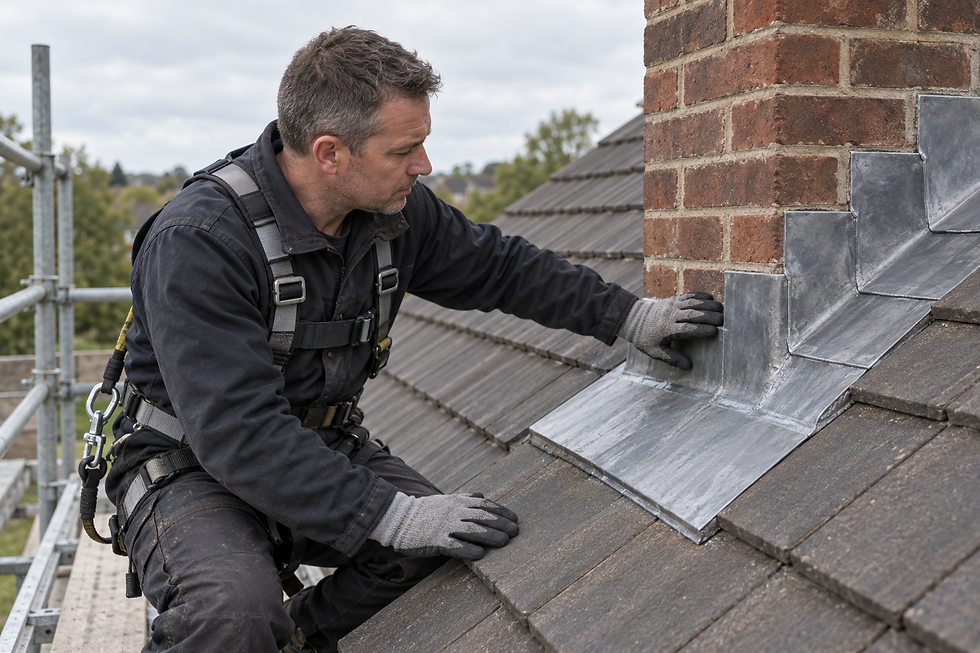
Seal the point where roof meets masonry
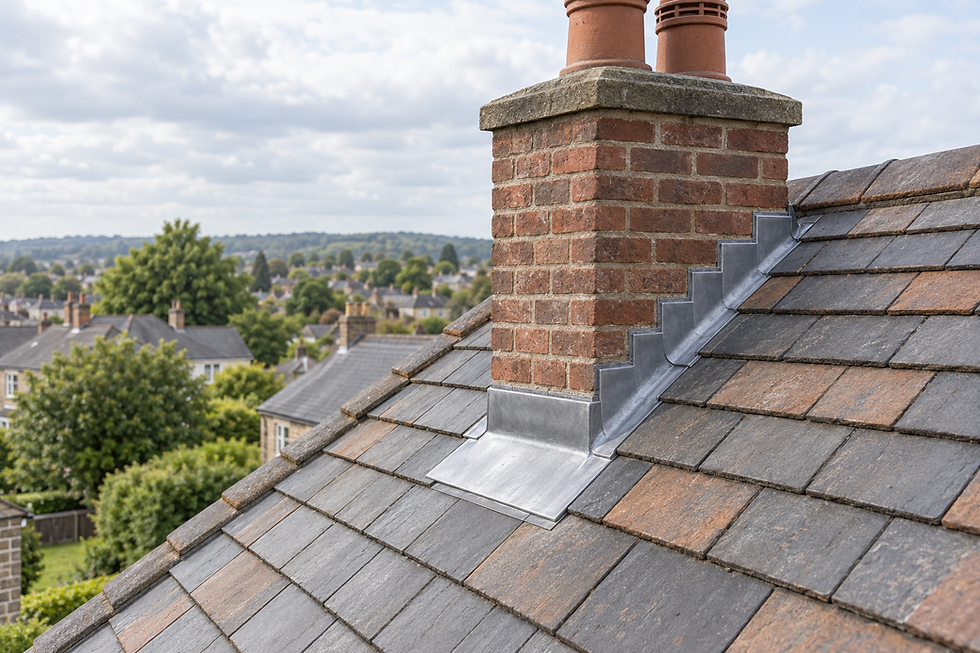
A chimney interrupts the roof covering, creating junctions on every side where rain must be directed away. Apron flashing protects the lower edge, step flashing follows the sides and the back gutter moves water around the upper side. Lifting metal, splits and failed joints can let damp appear near the chimney breast. We carry out chimney flashing repair in Cardiff by checking the metalwork, its connection to the masonry and the surrounding tiles or slates. This wider inspection matters because a damp mark near a chimney does not prove the flashing alone has failed.
Repair the junction, not just the visible gap
Sound flashing may only need resecuring in a limited area. Split, badly lifted or deteriorated pieces may need replacement, while failed weatherproof joints must be renewed properly. We select the repair after inspecting each side of the stack and the route water is likely to follow. Pointing and roof coverings also influence this junction, so we consider their condition alongside the flashing. Treating all three together during diagnosis helps prevent a tidy metal patch from leaving a cracked masonry joint or broken slate untouched.
Frequently asked questions
Does damp by the chimney always mean failed flashing?
No. Flashing is a common source, but cracked pointing, damaged coverings or another nearby junction may also admit water. We inspect the metalwork, masonry and roof surface together.
Can loose flashing simply be fixed back down?
Sometimes, if the material remains sound and the surrounding joints can be weatherproofed. Split, distorted or deteriorated sections may need replacement rather than another short-lived fixing.
What do the different flashing sections do?
The apron protects the lower junction, step flashing follows the chimney sides and the back gutter diverts water around the upper side. Together, they guide rain back onto the roof covering.